


“Don’t use your skin as a playground for marketing,” Dr Barbara Sturm tells us, in her characteristically matter-of-fact style. Founder of her eponymous skincare brand, the German doctor and anti-inflammatory pioneer takes a resolutely no-nonsense approach to skin, rejecting trends and buzzworthy ingredients in favour of streamlined formulas proven to reduce inflammation.
Featured in this article


When it comes to building an effective routine and knowing how to layer skincare, the key, she stresses, is tackling inflammation. “I think that inflammation is the biggest culprit when it comes to ageing,” she explains. “I’m an anti-inflammatory doctor, and my background is anti-inflammatory science. I started on orthopaedics, and lots of my skincare ingredients come from orthopaedic, anti-inflammatory science like exosomes and telomerase activators.”
Layering your skincare with nourishing, skin barrier-supporting ingredients is central to this philosophy – an idea she illustrates through her raisin-and-grape theory. But which steps go where? Which products are essential, and which can you skip for good? Here, legendary aesthetic specialist Dr Barbara Sturm breaks down how to best layer our skincare to maximise results.
A common misconception when you’re prone to doomscrolling TikTok for skincare recommendations is that more skincare layers mean better results. But that is not always the case. How extensive your routine should be is a matter of time, lifestyle and your skin needs. “You can have 10 steps, and it won’t hurt you”, says Dr Sturm. But you can also keep it simple, “I sometimes have only two steps. If you want just the most effective and quickest, you need to make sure your skin is super hydrated. I use hyaluronic serum and my face cream, and I’m out the door, and I will have glowy, beautiful, healthy, dewy skin.”
When selecting the products to include in your routine, it comes down to three main pillars, reveals the expert: hydration, barrier support and anti-inflammatory care. She uses the analogy of grapes vs raisins. “Grapes are the hydrated skin cells. You want the grapes,” she stresses.
The first step in curating an effective skincare routine is to establish the basics. And these, according to the aesthetic doctor, are the inclusion of a proper cleanser, gentle exfoliation a couple of times a week and hydration, hydration, hydration. She believes that with just these steps alone, you can achieve healthy, glowy skin.
Dr Sturm advises paying attention to the pH of this product. As the product most often applied to the skin, you want to start out on the right foot. Too alkaline (high pH) and it will strip the complexion of its natural oils, moisture and disrupt the skin barrier. The skin is naturally acidic (pH 4.5–5.5), and thus your cleanser should be as well to maintain barrier function and prevent inflammation. “I recommend my foaming cleanser because its pH is the pH of the skin, and it really helps the microbiome and the skin barrier to be strong.”

“You need to make sure your skin is mildly exfoliated before you add any serum or ingredient to your skin,” she recommends to prep your skin for active ingredients and maximise absorption. But only when done right. Overexfoliating only damages the skin barrier. “So twice a week, use my Enzyme Cleanser, which is the mildest, most gentle form of exfoliation because it’s done by enzymes.” Additionally, she says this step helps prevent breakouts by removing dead skin cells that could clog pores.


Dubbed by the skincare expert as the “grape maker”, hyaluronic acid brings instant hydration to the skin.

Skinceuticals
H.A. Intensifier Multi-Glycan
- Best hyaluronic acid for deep hydration
- Why it’s Vogue approved: This hard-working serum doesn’t just treat dehydration from the outside, but it also works to amplify the skin’s own HA production over time. It contains 1.3 per cent hyaluronic acid and 12 per cent proxylane to improve skin quality and texture, as well as a postbiotic ferment extract to help increase and preserve hyaluronic acid levels in the skin’s upper layers.
- intensely hydrating and plumping
- smoothing impact
- quickly absorbing
- price

Medik8
Hydr8 B5 Liquid Rehydration Serum
- Why it’s Vogue-approved: One of the best hyaluronic acid serums for a reason. “It’s lightweight and plays well with all the other products in my routine,” says contributing beauty editor Lauren Murdoch-Smith. “It’s the kind of formula that my skin drinks up, so it alleviates dryness, but it’s also not sticky. It works wonders at plumping and smoothing the face, neck and hands over time too. I’m obsessed.” Combining smaller HA molecules with heavier ones, it works on multiple layers of the skin for ultra-effective hydration. Free from oil, fragrance and any irritating actives, Medik8’s hydrating serum is a great choice for all skin types. Those with very dry skin will benefit from the multi-weight hyaluronic acid formula enhanced here by vitamin B5, which soothes as HA draws moisture both deep into the dermis and onto the surface of the skin.
- has a non-sticky formula that absorbs quickly
- dropper is marked with measurements for consistent application
- small bottle, but a little goes a long way
“Protect your skin barrier from any external aggressors like UV, pollution or blue light with a lipid-rich face cream,” Dr Sturm says. She formulated her brand’s Face Cream to include anti-inflammatory ingredients like purslane, which is an antioxidant.

Tatcha
The Water Cream
The equivalent of a chilled glass of water for the complexion, The Water Cream is one of my favourite moisturisers on the market. You don't need much as a treat to parched skin, offering a wash of hydration while remaining lightweight. It is infused with Japanese botanicals and the brand's own superfood Hadasei-3 to restore stressed skin and plump without greasy residue or stickiness.

Elemis
Pro Collagen Marine Cream SPF 30
- Key ingredients: micronised sunscreen, skin-tightening Mimosa extract and elasticity-boosting padina pavonica
- Benefits: has a weightless gel formula that melts into the complexion and softens skin on contact, provides broad spectrum sun protection from harmful UV rays
- Why it’s Vogue-approved: Here is a cream that epitomises the adage “you get what you pay for.” While it immediately softens and conditions skin of all ages, its blend of clinically proven collagen-promoting factors makes it the ultimate formula for those with mature and dry skin. In all our years of trialling beauty, no moisturiser has come close to its time-tested acclaim, and while it’s on the spenny side, we can confirm it is a sure investment for eternally supple skin.
“We need sunlight for vitamin D production, which is actually a hormone, for our mental health, for our bones, for our respiratory tract, for our heart condition,” she explains. However, “it needs to be in balance and in moderation and always with SPF.” But it is important to always shield your skin against the environmental aggressors like UVA and UVB rays, but also pollution and blue light that can cause stress to the skin.

Augustinus Bader
The Sunscreen SPF50
- Type: cream
- Sun Protection Factor: 50
- Mineral/chemical: chemical
- Why it’s Vogue-approved:
Avid Bader fans will have eagerly awaited this SPF and can rejoice that it’s as good as expected. The formula itself is loaded with UVA and UVB protection, and it also contains the brand’s signature TFC8 complex, a blend of natural amino acids, vitamins and peptides, which repairs and protects skin and encourages swifter cell renewal, especially post sun exposure. In addition to a potent formula, the featherlight cream melts into skin, leaving it with a subtle dewy sheen that makes make-up application a doddle.
- Lightweight texture sinks in straight away
- Helps reduce redness
- Sits well under make-up
- Improves hyperpigmentation
- It’s pricey


SUPERGOOP!
Glowscreen Sunscreen Sunrise SPF 30 PA+++ with Hyaluronic Acid + Niacinamide
Why it’s Vogue-approved: “How do I love thee Glow Screen? Let me count the ways,” Vogue’s shopping editor Joy Montgomery rhapsodises. “Whether you wear it by itself or as a primer under make-up, Glow Screen is essentially a lightly tinted SPF that instantly makes you look like you’ve just landed from a week’s wellness retreat. I’m not usually a fan of tinted skincare products – it’s so easy for the shade to be off or any shimmer to translate as ‘extra terrestrial’ rather than ‘It-girl’ – however, Supergoop’s formulation (which comes in four shades) blends in seamlessly, just leaving the subtlest sheen for that sought-after “your skin but better” finish.”
When it comes to layering serums, Dr Sturm says, “You always start with the light, watery serums.” Think lightest to heaviest. With this in mind, hyaluronic acid, as a water-based serum, is usually first and is then followed by light actives like anti-ageing peptides or exosomes. Oil-based or rich textures are slotted before your face cream, which locks it all in. Read the full Vogue guide here.
She adds that you should wait around 20 seconds in between layers and has a helpful way of making that work in her morning routine. “Before I apply the next one, I make sure it really goes into my skin. I start naked, put my HA serum on, then put on my underwear, and then I come back to the mirror, and I do my next serum. I keep going back and back and once I’m dressed, I’m also done with my skincare.”
.png)

The focus for your AM and PM routines is different, which is why the products included will also change. In the morning, hydration, protection and lightweight textures are favoured, while at night, it’s all about rejuvenating. “At night, our skin has a different task than throughout the day. At night, we rejuvenate, we repair, we heal, so you need different ingredients to support. Also something happens called transepidermal water loss.” She favours the inclusion of polyglutamic acid, a powerful humectant that holds more water than hyaluronic acid to prevent this, which also serves to plump fine lines.

- Size: 50ml
- Key ingredients: polyglutamic acid, hyaluronic acid, avocado peptides, purslane
- Benefits: provides intensive hydration, plumps fine lines and wrinkles, strengthens the skin barrier and soothes inflammation
- Why it’s Vogue-approved: The main purpose of a night cream is to support the skin’s nocturnal processes so that it can effectively repair itself overnight. Containing an exclusive DBS Night System™, a three-fold, advanced science system along with a host of powerful rejuvenation actives, this rich cream works with the skin to help regenerate proteins, lipids and cells affected by oxidisation during the day so that you can wake with healthy, glowing skin.
- Skin feels soft and supple in the AM
- Rich cream texture
- Price
Dr Sturm says heavy, irritating oils are not best suited for those with rosacea. On the other hand, soothing ingredients like niacinamide, ceramides, centella or azelaic acid can calm redness and support the skin barrier. She advises the use of a gentle cleanser and to pay attention to diet, which may trigger a rosacea flare-up – “it’s not just what skincare you use, it’s also the way you live.”
When you have eczema, the more gentle, the better, which is why many, including Dr Sturm, encourage the use of products from kids’ and babies’ collections. “Bring healing ingredients to support and nourish the skin barrier,” she says. Fragrance-free products may combat potential irritation.
“What’s really important if you have acne-prone skin,” Dr Sturm tells us, is to “never dry out your skin. Skin always needs hydration. There’s no way around it. If you have dehydrated or dry skin, you have to fix it. Skin never works dehydrated. You need the grapes.”
For oily skin types, Dr Sturm recommends switching to a lighter face cream and incorporating clarifying serums into your routine.
The difference between your summer and winter skincare routines is down to the richness of your moisturiser. “In summer, your skin is more oily than in winter, so you use less oily face cream,” Dr Sturm explains. Whereas in winter, colder weather causes blood vessels to tighten, which reduces circulation. This, combined with cold air and indoor heating, dries out the skin and compromises the skin barrier, so you need a thicker, richer moisturiser to suit. You may also increase exfoliation in summer and apply more SPF.
Dr Sturm makes it clear that she does not believe in the likes of skincare fasting, nor that your skin can get used to the products that you use. Perhaps controversially too, the aesthetic doctor deems retinol is not in line with her brand’s “anti-inflammation is anti-ageing” principle. Retinol is commonly misused, which can lead to inflammation. The potent active may irritate when first used or used at too high a strength and disrupt the skin barrier, leading to transepidermal water loss – “Now, you don’t have the grapes, you have the raisins.” That being said, it is one of the most studied anti-ageing ingredients that increases cell turnover, improves texture, signs of ageing and pigmentation. But use it gradually. Read our retinol guide to find out more.

Medik8
Crystal Retinal 1 Serum
- Key ingredients: 0.01 per cent stabilised retinal, hyaluronic acid, glycerin, vitamin E
- Why it’s Vogue-approved: Medik8 is a brand well known for its stellar retinoid formulas. Beginners should start with Crystal Retinal 1, which contains 0.01 per cent stabilised retinal, a retinoid (meaning it’s in the same family as retinol) which has been shown to work 11 times faster on the skin. This formula really works and the number rating system (there is a Crystal Retinal 2, 3 and 4, for example) makes the sometimes confusing task of increasing your retinal strength very easy.
- “Though marketed as a serum, Medik8’s viral retinal feels much more like a lightweight cream. It’s deceptively cosseting – just one use stimulates results, and I was pleasantly surprised to see some dry patches had smoothed out overnight. It also works quickly without being aggressive on the skin barrier. Within a month of using it, I noticed my complexion was calmer and clearer with fewer breakouts. If, like me, you have sensitive skin, you will love this one – as will anyone just starting on their retinol journey.” — Tracy Achonwa, beauty writer
- Gentle but effective
- Different strengths to build up safely
- Firming, plumping and brightening
- May irritate blemish-prone complexions
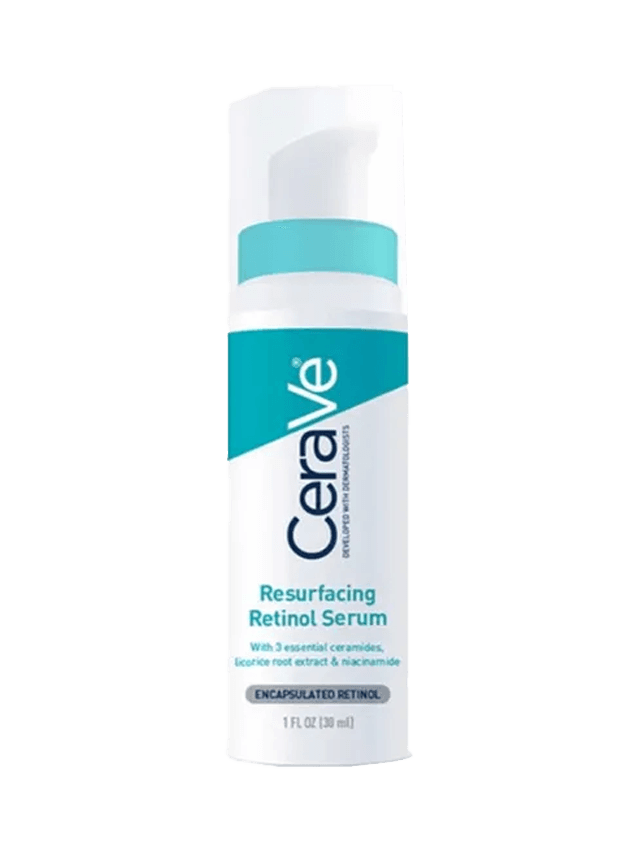
CeraVe
Resurfacing Retinol Serum
- Why it’s Vogue-approved: CeraVe’s Resurfacing Retinol Serum is brilliant for those suffering from blemishes or acne, as well as enlarged pores and post-inflammatory hyperpigmentation. With encapsulated retinol, it’s gentler on the skin barrier, so it won’t cause further irritation to the skin.
- Key ingredients: encapsulated retinol, liquorice root extract, niacinamide, ceramides
- Affordable
- Good for acne scarring and uneven texture
- Requires consistent use
- May be drying so layer up with hydrating serums
Look out too for the percentage of vitamin C that you are applying to the skin. “There are so many hardcore vitamin C serums,” Dr Sturm says, and when it is included in a high strength and low pH, “It can damage your skin.” The effectiveness of a vitamin C serum is highly dependent on its form, pH, stability and delivery system.

Skinceuticals
C E Ferulic Vitamin C Serum
Why it’s Vogue-approved: “It just delivers,” says Vogue’s beauty director Funmi Fetto. “It gives you the skin that you’ve always dreamt of. I don’t subscribe to perfect skin, but this serum helps to give you your best skin. Whenever I look tired, I layer it on, and it’s immediately glowing.”

Augustinus Bader
The Vitamin C Serum
I have used a wide variety of vitamin C serums over the years and typically find them to be greasy and challenging to layer with other products or under make-up. This is not the case with Augustinus Bader's The Vitamin C Serum. The lightweight, gel-like texture quickly absorbs without leaving behind a residue or causing cosmetics that follow to pill or ball. The fragrance-free formula is not oily and is free from the likes of silicones and parabens, which makes it easily tolerated by those with sensitive and blemish-prone skin.
It sets the named ingredient alongside ergothioneine to enhance its effects, niacinamide to support the skin barrier, algae evening complex to calm redness, and the signature Augustinus Bader TFC8 technology for cell renewal and to maximise the absorption of the aforementioned. The impact is immediate; skin is glowy and protected from oxidative stress, but the results are long-lasting too.
Dr Sturm stresses to avoid the ingredients that “break through your skin barrier, make your skin look red and break out.” She emphasises that redness, stinging or tightness is categorically not a sign that something is working. “Do the things that are nourishing, healing, repairing and strengthening,” she says and remember happy skin is hydrated skin.